
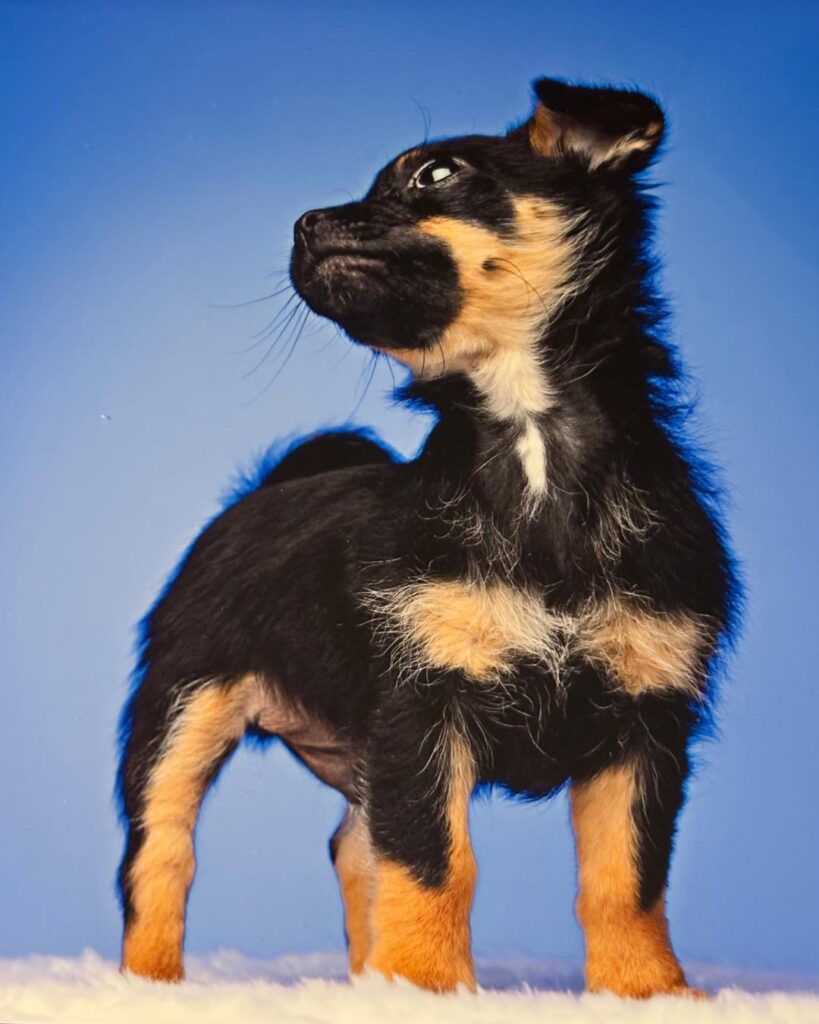
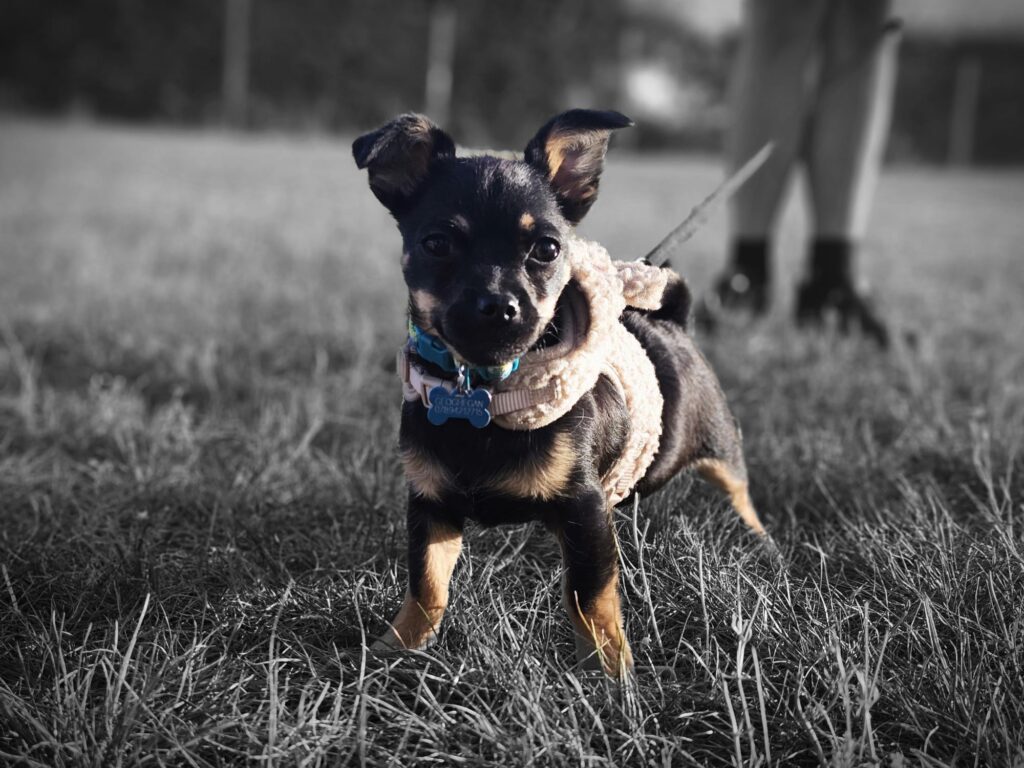
Hello my name is Bear I am a Chug (Chihuahua x Pug) and eventually I will be in training to become a therapy dog, to be by your side, to help and support you while you work with what you bring to therapy, but right now I am a puppy at 10 months old and I love to play, and pinch shoes, socks and particularly feet, I love to keep my human mummy and daddy on their toes and I love to give lots and lots of sloppy kisses. If you visit me on my mummies social media pages, you can watch me grow and learn along the way how exciting.



Benefits of a therapy dog in the counselling room.
Therapy dogs have a remarkable and unique role: they are specially trained to provide comfort, support, and affection to those who may be facing challenges or stressful situations. Having a dog in the counselling room can significantly enhance the therapeutic experience by reducing anxiety, improving communication, breaking down any barriers and offering emotional support, helping to create a soothing, calming environment. Dogs provide a distinctive form of companionship that fosters a stronger connection between the therapist and the client. The unconditional love and nonverbal connection provided by a dog enables a sense of trust, while creating a safe space where healing and personal growth can thrive at the clients own pace. Clients often find it easier to start conversations by talking about the dog or sharing related stories. Dogs are keen observers of human behaviour and emotions and therapists can often use a dog’s reactions to better understand a client’s emotional state.
Engaging with a friendly, non-judgmental dog stimulates the release of oxytocin. This calming effect helps clients feel more comfortable and creates a space for them to share their thoughts and emotions openly. While Interacting with a dog whether it be petting, hugging, or simply having them close, stimulates the release of endorphins, offering significant comfort, while helping clients to open up more and engage in deeper self-reflection.

The Qualities of a Therapy Dog
- Calm demeanour – One of the most important qualities of a therapy dog is a calm and stable demeanour.
- Gentle and friendly nature – This is essential in establishing a quick and strong bond with the clients, Their friendly attitude makes the dogs approachable and inviting, encouraging those who may be shy or withdrawn to interact
- Good temperament around strangers – Therapy dogs are exceptionally good with strangers. They do not show signs of discomfort or fear when meeting new people,
- Adaptability to various environments – A therapy dog’s ability to adapt to different environments is essential.
- Resilience to stress – The nature of the work can sometimes be stressful for both the dog and the therapist. A good therapy dog can handle this stress without becoming agitated or upset.
- Intuitive to emotional needs – Therapy dogs often display an understanding of the emotional needs of the clients. They seem to know just when to offer a nuzzle for comfort or when to simply sit quietly by the clients side. This sensitivity is what makes them so effective in therapeutic settings.
- Well-trained and socialised – Besides their innate qualities, therapy dogs are also well-trained and socialised.
- Consistency in behaviour – Consistency is key for therapy dogs. They must reliably demonstrate their calming, friendly, and gentle nature each time they are in a therapeutic setting. This predictability in behaviour ensures a safe and positive experience for those interacting with them.